Wheelie Conduct: What the Bins Say About Your Street
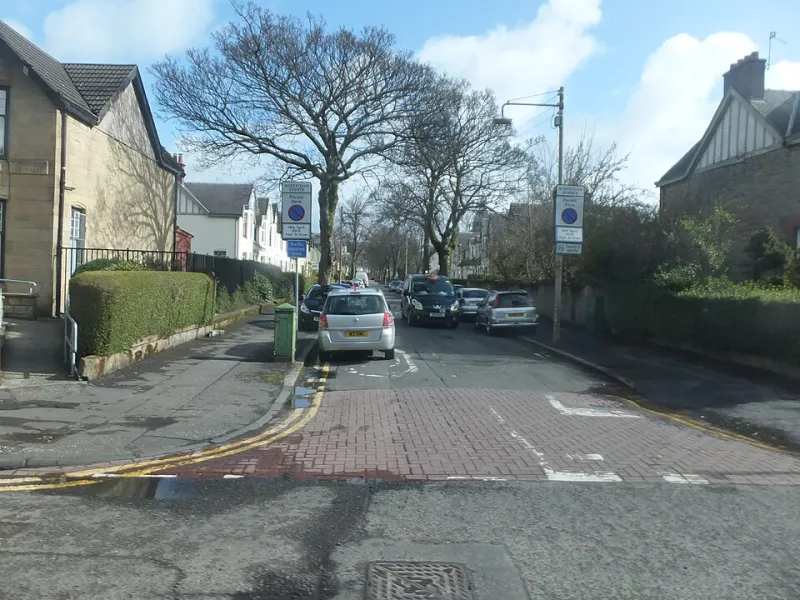
Photo: Barbara Carr , CC BY-SA 2.0, via Wikimedia Commons
Bin day is the closest thing many streets have to a constitution. Not the written sort, with clauses and a crest, but the lived sort: a laminated calendar, a WhatsApp group with forty-two members and one person who always knows whether it is recycling week or garden waste week. The wheelie bin is not glamorous. It is, however, one of the last shared rituals left on a residential street. Everybody has a stake in it. Everybody has an opinion about it. And everybody, at some point, has stood at a window at 6:40am wondering whether the lorry has been, is coming, or has been diverted to a parallel universe with better access roads.
The Choreography Begins
Watch a street on bin morning and you will see a performance in three acts. Act one is the early risers: curtains twitch, front doors open, bins are wheeled out with the solemnity of a flag-raising. Act two is the school-run scrum, when bins and buggies negotiate the pavement like a low-budget production of Swan Lake. Act three is the retrieve, that strange half-hour after the lorry has gone when adults in dressing gowns shuffle out to reclaim their plastic containers and exchange the day's only conversation.
Every street has its own tempo. Some put the bins out the night before, which is either sensible or showing off, depending on your view. Some wait until they hear the lorry at the top of the road and then enact the bin hokey-cokey: lid up, lid down, in, out, shake it all about. Others have a self-appointed bin marshal, usually a retired neighbour with a clipboard and a keen sense of civic order, who will knock on your door if you have put a plastic tub in the wrong box. You may resent this. You will also, secretly, be grateful.
The Calendar as a Social Document
The bin calendar is a social document masquerading as a piece of junk mail. It tells you what the council thinks of you. A clear, colour-coded leaflet with pictures of yogurt pots and a friendly reminder about food waste suggests a certain respect for the taxpayer. A photocopied sheet, slightly askew, with the words 'check website for changes' in 8pt type, suggests something else entirely.
Then there is the great mystery of contamination. Put one greasy pizza box in the wrong receptacle and the whole street becomes a crime scene. A sticker appears on your bin like a parking ticket. Neighbours glance at it. Some sympathise. Some do not. The bin becomes a public notice of private failure. It is remarkable how quickly a mild-mannered street can turn into a tribunal over whether a Tetra Pak is recyclable. The answer, as ever, depends on the council, the month and the phase of the moon.
The Etiquette of the Retrieve
Bringing in a neighbour's bin is a small act of diplomacy. It says: I have seen you, I have noticed your absence, and I have decided not to let your wheelie bin stand at the kerb like an abandoned suitcase. But there are rules. Do not bring it in before the lorry has actually emptied it. Do not bring it in if it is still full and the collection has been missed, because then you are just moving someone else's problem. And do not, under any circumstances, bring it in and then put it back in the wrong place. The handle should face the house. The lid should be shut. The recycling boxes should be stacked in the order the household has agreed, which is never the order you would choose.
A brought-in bin is a tiny gift. It costs nothing, takes ten seconds and generates a surprising amount of goodwill. In a country where we are famously bad at saying what we mean, the wheelie bin has become a love language. 'I saw your bin was out' means 'I noticed you were away' or 'I noticed you were ill' or simply 'I am a decent person and I have two minutes'. It is not much. It is also everything.
Missed Collections and the Limits of Trust
Nothing tests civic trust quite like a missed collection. First comes disbelief. Then comes the group chat. Then comes the ritual blaming of the council, the bin lorry, the weather, the seagulls and the neighbour who put out a bag of nappies in with the cardboard. The bin sits there for another fortnight, a monument to administrative failure, while the street slowly loses faith in the whole system.
And yet, bin day endures. It is one of the few remaining occasions when a street has to act together, even if it is only to make sure the recycling boxes do not blow into the road. It is a weekly reminder that we live in a place, not just in a house. The bins are plastic and ugly and smell faintly of last week's lasagne. But they are also a form of public life. Read them carefully and you can see who is old, who is new, who is away, who is struggling and who has simply given up and put the garden waste in with the general rubbish.
A Small Civic Ballet
So here is to the wheelie bin, the recycling box and the food waste caddy. Here is to the bin lorry at dawn and the neighbour who brings your bin in. Here is to the laminated calendar on the fridge and the group chat that nobody admits to needing. It is not a constitution. It is not a public square. But it is a shared ritual, and on a grey Tuesday in November, that is worth something.