The Mayor in the Machine: In Defence of the Council Car Park
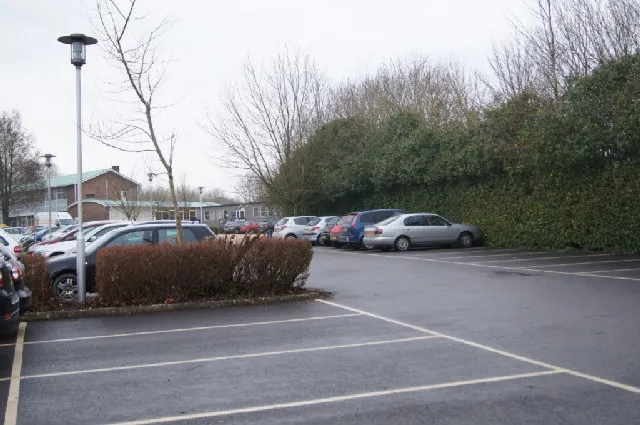
Photo: ad acta , CC BY-SA 2.0, via Wikimedia Commons
The council car park behind the Co-op is not a beautiful place. It has puddles in the shape of Estonia, a ticket machine that has been out of order since spring and a barrier that no longer goes down. It is also, if you look properly, one of the last genuine public squares we have left. Not a square in the architectural sense. There is no fountain, no bandstand, no statue of a Victorian philanthropist. There is tarmac, white lines and a sign that says '2 hours free, no return within 1 hour'. But public space does not have to be pretty. It has to be shared.
A Square With White Lines
The car park is where the town meets itself. On market day, it is a staging post for stallholders, van drivers and people carrying unreasonable numbers of leeks. On a wet Tuesday, it is a shelter for dog walkers, delivery drivers and teenagers eating chips in a hatchback. On a Sunday, it is a place to leave the car while you go to the church, the charity shop or the garden centre. It is not glamorous. It is useful. And useful is a word we do not celebrate enough.
A public square is supposed to be a place where different sorts of people cross paths. The car park does that better than the pedestrianised high street, which is mostly full of the same three shops and a bench with a plaque. The car park has no dress code. It has no curator. It has no opening hours beyond the sign on the gate. It accepts everyone from the district nurse to the man who runs the car boot on Sundays. It is the closest thing we have to a level playing field, assuming the playing field has a slightly uneven surface and a ticket machine that only takes coins.
The Early-Morning Parliament
Arrive at 7:30am and you will find the dog walkers. They come in a loose procession, cars parked nose-in, tailgates open, dogs greeting each other with the enthusiasm of old colleagues. The dog walkers are the car park's early-morning parliament. They know the weather, the state of the footpaths and which bin has been knocked over. They know who has moved in and who has moved out. They know that the ticket machine is broken again and that the warden does not come before nine. They are the unofficial intelligence service of the town.
Then come the tradespeople. Vans with ladders, vans with pipes, vans with a surprising amount of carpet. They park with the confidence of people who have done this a thousand times. They do not read the signs. They have transcended the signs. They are in and out before the machine has finished booting up. The car park is their office, their kitchen, their meeting room and their lunch break. It is also where they shout at each other about football, which is a form of civic theatre.
Market Day and the Staging Post
On market day, the car park becomes a logistics operation. Trailers are unhitched. Boxes are unloaded. Someone is always reversing a van into a space that is slightly too small while a man in a high-vis jacket waves his arms in a way that could mean 'left a bit' or 'abandon ship'. The market is the main event, but the car park is the green room. It is where the traders have their first cup of tea, where they complain about the pitch fees and where they decide that the weather will either hold or ruin everything. It is the backstage of the town's weekly performance.
And then there are the shoppers. They arrive with bags, trolleys and a vague sense of duty. They park, they pay, they walk into town, they come back, they put the shopping in the boot and they drive away. It is a transaction so ordinary that we never think about it. But it is also a shared ritual. Everyone is doing the same thing in the same place at the same time. For a few minutes, the car park is a community centre with cars in it.
The Ticket Machine as Mayor
Every car park has a ticket machine, and every ticket machine is a small civic drama. Ours is the mayor. It is not elected, it cannot be recalled and it has a habit of refusing the one coin you have. It has a screen that fades in direct sunlight and a button that has been pressed so many times it no longer says anything. It is the point at which the council and the citizen meet, and it is rarely a happy meeting.
But the machine also has a kind of authority. It sets the terms. It tells you how long you can stay, how much it costs and what happens if you overstay. It is the rule of law in a grey box. When it breaks, there is a brief sense of liberation. People park for free. They stay a bit longer. They buy an extra coffee. The town feels temporarily lawless and slightly more cheerful. Then the machine is fixed, and the order returns. The mayor is back.
The Theatre of Minor Disputes
The car park is also a theatre of minor disputes. Someone has parked across two bays. Someone has taken the disabled bay without a badge. Someone has left a trolley in the middle of the aisle. Someone has reversed into someone else's wing mirror and driven off. These are not the great conflicts of our age. They are small, local and deeply satisfying to observe from a safe distance. They remind us that civic life is not just about voting and paying council tax. It is also about not being the person who parks like an idiot.
The warden, when they appear, is the car park's police force and its pantomime villain. Everyone watches them. Everyone has an opinion. Everyone claims to know someone who was unfairly ticketed. But everyone also knows that without the warden, the disabled bay would be full of vans and the parent-and-child spaces would be full of people who are neither parents nor children. The warden is not popular. The warden is necessary. That is a good description of local government in general.
Why It Matters
I am not suggesting that we put a plaque on the car park or start running guided tours. I am suggesting that we notice it. The car park is one of the few places where the town still mixes. It is not curated. It is not branded. It is not trying to sell you a lifestyle. It is just a piece of tarmac with some white lines and a machine that takes coins. And yet, on a Saturday morning, it is full of life. It is the place where the market traders and the dog walkers and the delivery drivers and the shoppers all briefly share the same space. That is worth something.
So next time you park behind the Co-op, take a moment. Look at the puddles. Listen to the van doors. Watch the dog walkers. Read the sign about the maximum stay. It is not a public square in the guidebooks. But it is a public square in practice. And in a country where so many public spaces have been privatised, fenced off or turned into a coffee chain, that is a small, stubborn victory. The ticket machine is the mayor. The tarmac is the town hall. And the two hours free are a civic right.