Dunroamin and Other Lies: What the Plaque by the Door Tells the Street
Photo: Jaggery , CC BY-SA 2.0, via Wikimedia Commons
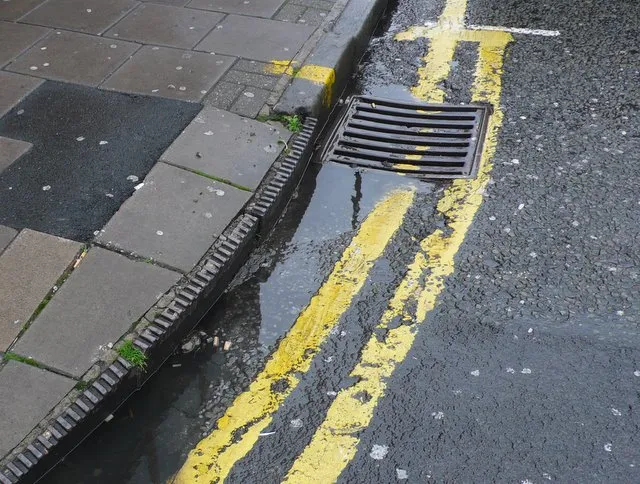
There is a road near me that I walk when I have no particular place to be. It is not a beautiful road. It has a bus stop, a chippy, and a kerb that has been repaired so many times it looks like a patchwork quilt. But it has house names, and that is enough.
You can learn a lot from a plaque. More than from a doorbell, less than from a wheelie bin. A house name is a small public statement, chosen by someone who once stood in a builder’s merchant and thought: this is who we are now. It is an autobiography in two words, screwed to a wall.
The plaque as autobiography
The classic is Dunroamin. It is a name that has been mocked so thoroughly that it has almost become innocent again. But think about what it meant the first time someone chose it. A bungalow, probably. A couple who had spent years in rented rooms, or a flat above a shop, and who had finally reached a place where they could stop. Dunroamin is not a joke. It is a quiet sigh of relief, cast in resin and painted gold.
Then there is Shangri-La. Always optimistic, usually a semi. Shangri-La suggests a person who has read a book, or at least seen a film, and has decided that their cul-de-sac in Bexhill can be a lost horizon. I admire that. It is the naming equivalent of wearing a silk scarf to the supermarket.
The Firs is different. The Firs is a claim on the past. There are no firs. There may never have been firs. But The Firs says: this land was something before it was a housing estate, and I am the inheritor of that something. It is a small act of historical invention, and it is very British.
A short taxonomy of the British house name
Broadly speaking, the plaques fall into a few camps.
There is the nostalgic camp: Dunroamin, Mon Repos, Casa Mia, Rose Cottage, The Old Forge. These names are about rest, or a memory of a holiday, or a cottage that is not a cottage. Rose Cottage on a 1970s estate is not a lie, exactly. It is a wish.
There is the aspirational camp: The Lodge, The Mews, The Barn, The Grange. These names are about property values. They suggest outbuildings, gravel, and a car that is washed by someone else. The Barn is rarely a barn. The Mews is rarely a mews. But the plaque is doing its best.
Then there is the ironic camp, which is newer and more knowing. Names like ‘Dunwittering’, ‘Toad Hall’, ‘The Bat Cave’, ‘Chez Nous’. These are chosen by people who know the rules of house naming and are gently taking the mickey. They are the equivalent of a personalised number plate that spells something rude if you squint. I like them. They keep the street honest.
Sea views, whether or not
There is a special subcategory of house name that I think of as sea-view optimism. It is a name like Sea View, or Ocean Heights, or The Lookout, on a road where the sea is at least a mile away and possibly in the other direction. Sometimes you can see a sliver of water from the upstairs back bedroom if the hedge is cut. Sometimes you cannot.
But I understand it. A house name is not a survey. It is a mood. Sea View is a promise that the coast is part of your life, even if you only go there on a Sunday. It is a name that says: I have not forgotten the horizon. And on a grey November afternoon, that is worth something.
The politics of the suffix
Then we come to the suffixes. House. Cottage. Barn. Mews. Lodge. These are not neutral. They are committee-approved signals. If you live in a number and you decide to add a name, you are making a small planning application to the court of public opinion. The suffix is the evidence you present.
A ‘House’ is solid. A ‘Cottage’ is cosy, even if it has a double garage. A ‘Barn’ is rustic, even if it was built in 2004. A ‘Mews’ is urban and slightly exclusive. A ‘Lodge’ implies grounds, or at least a hedge. None of this is regulated, which is the joy of it. You can call your 1930s semi ‘The Lodge’ if you want. The street will have opinions, but the plaque will stay.
There is also the quiet snobbery of the number-only front door. No name. No plaque. Just a number, maybe a nice number, maybe in brass. This is a different kind of statement. It says: I do not need to tell you who I am. It is the naming equivalent of a plain white shirt. It is not necessarily arrogant. Sometimes it is just a preference for the factual. But on a street of Dunroamins and Shangri-Las, a number-only door can feel like a raised eyebrow.
In defence of the plaque
I am not against any of it. I like the plaques. I like the fact that people bother. A house name is a small act of creativity in a world that mostly asks us to be numbers. It is a bit of nonsense, screwed to a wall, and it tells you that someone, at some point, cared enough to choose.
So next time you walk down a road you do not know, read the names. You will learn about the people who live there, or at least the people they wanted to be. And you will probably pass a Dunroamin, and you will probably smile. That is the point.