Rain-Smudged Truths: The Pub Chalkboard as Local Newspaper
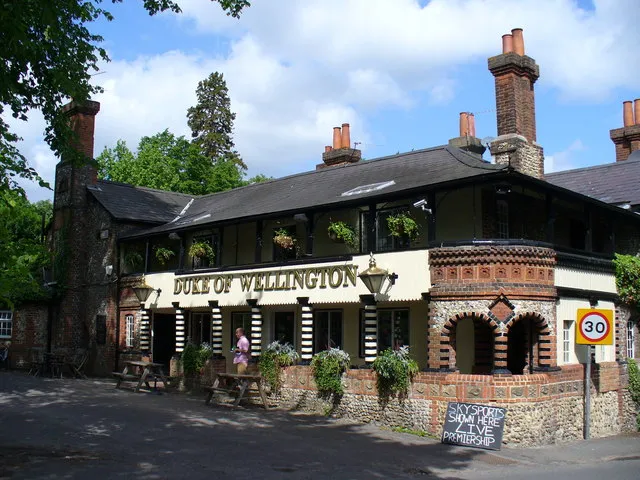
Photo: Colin Smith, CC BY-SA 2.0, via Wikimedia Commons
A good pub A-board is a small miracle of local journalism. It is written by hand, published by the door, read by perhaps forty people a day and updated whenever the landlord remembers. It has no editor, no fact-checker and no legal department. It has chalk. Somehow, that is enough.
The Front Page by the Door
The chalkboard is the front page of the street. It tells you what is on, what is off, what is sold out and what has been discontinued after a regrettable incident involving a deep-fat fryer. It announces quiz night, open mic night, Sunday roast, guest ale, dog-friendly hours and the fact that the kitchen is closed on Mondays. It does all this in a hand that looks like it was taught to write by a collapsing deckchair. And yet, somehow, it is more trustworthy than most websites.
A printed menu is a promise. A chalkboard is a conversation. You can see the hesitation in the letters. You can see where the landlord started to write 'homemade scotch eggs' and then remembered they were bought in. You can see the rain has got to the opening hours, so that Tuesday looks like it might be open until 9pm or possibly 3pm, depending on how you read the smudge. This is not a failure of communication. It is a form of honesty. The world is uncertain. The board reflects that.
Puns, Spelling and the National Mood
The British pub chalkboard has a long and noble tradition of puns so bad they come out the other side. 'Ale and hearty.' 'Pint of view.' 'Chips with everything.' 'Wine not?' 'Beer today, gone tomorrow.' You do not have to like them. You do have to respect the commitment. Somewhere in a back room, a landlord is writing 'Hoppy Christmas' in August and feeling very pleased with himself.
Then there is the spelling. A misspelled 'chalboard' is not a tragedy. It is a signature. It tells you that the person writing it is busy, human and probably holding a pint in the other hand. The board that says 'Todyas soup: tomarto and basil' is not less informative than the board that says 'Today's soup: tomato and basil'. It is more informative. It tells you the soup is homemade, the writer is in a hurry and the kitchen has a sense of humour.
The board also reflects the national mood. In a good week, the chalk is bold and the exclamation marks are plentiful: 'QUIZ TONIGHT 8PM!!!' In a bad week, the board says 'Open as usual' in small letters and nothing else. You can read a town's confidence in the angle of its A-board. A board left out in the rain, half-erased by weather and indifference, is a small essay on decline. A board with fresh chalk, a drawing of a pint and a friendly message about dogs is a small essay on hope.
The Emergency Noticeboard
The A-board is also an emergency service. It tells you the road is closed. It tells you the kitchen has run out of roast potatoes. It tells you that the pub is shut for a private function and that the landlord is sorry, but not that sorry. It tells you where the beer festival is, where the lost cat was last seen and where you can buy raffle tickets for the church roof. It is a bulletin board with a beer garden.
In a small town, the A-board is often faster than the council website. The council website will tell you that the road is closed for resurfacing from Monday to Friday, subject to weather conditions and statutory undertakers. The A-board will tell you: 'ROAD CLOSED. USE BACK LANE. SORRY.' One of these is more useful. One of these is also more likely to be true.
The Weather Report in Chalk
The rain-smudged opening hours are not a bug. They are a feature. A board that has been out in a November downpour is a document of endurance. The chalk runs. The letters blur. The word 'Sunday' becomes a suggestion. The word 'roast' becomes a rumour. You stand there, hood up, trying to decode the smudge, and you realise that you are engaged in a form of local archaeology. The board is telling you not just when the pub is open, but what the weather has been doing and how much the landlord cares about keeping up appearances.
A pristine board, under a canopy, with perfect lettering and a small drawing of a hop cone, is a different kind of statement. It says: we have our act together. We have a person who can draw. We have not been defeated by the elements. That is also useful information. You may not want a pub that is too tidy, but you probably want one that knows what day it is.
How to Read a Good Board
Look for the details. A board that mentions the name of the beer is better than one that mentions 'guest ale'. A board that says 'dogs welcome' is better than one that says 'no dogs'. A board that lists the soup is better than one that lists 'food'. A board that has been updated since Tuesday is better than one that still says 'Happy Easter' in July. A board that makes you smile is better than one that makes you walk on. It is not a high bar. It is a chalkboard.
And when you find a good one, go in. Order the soup. Read the board again on your way out. It may have changed. The chalk may have been refreshed. The landlord may have thought of a new pun. This is local journalism at its most immediate. It is also, if we are honest, the only newspaper most of us read on a daily basis.
A Recommendation
So next time you pass a pub or a café with an A-board, stop for a moment. Read it properly. Notice the spelling, the smudge, the exclamation marks, the desperate plea for quiz teams. It is a small window into a town's soul. It is also a reminder that communication does not need to be polished to be true. Chalk is cheap. Attention is not. Give the board a minute. It has been waiting all morning.