Egg Money and Courgette Diplomacy: A Field Guide to the Roadside Honesty Box
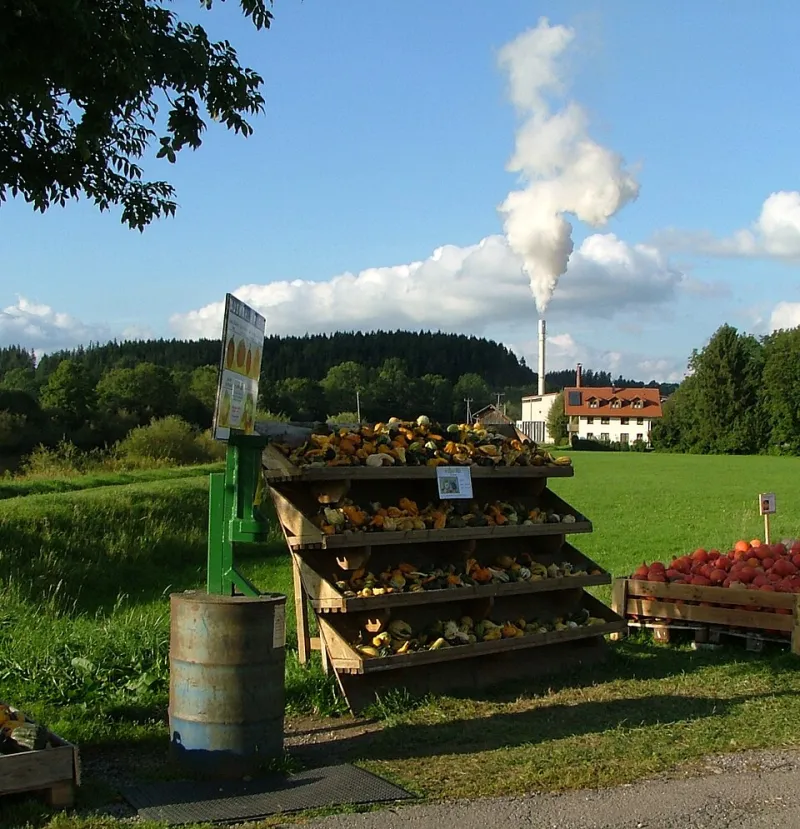
Photo: Richard Mayer, CC BY 3.0, via Wikimedia Commons
At the end of a drive, on a table, under a sheet of plastic: eggs. A tin. A sign. 'Eggs £2.50 a dozen. Please leave correct money. Thank you.' Nobody is there. This is Britain's smallest shop, and it is also its most revealing.
The literature of the handwritten sign
The roadside honesty box has produced a small, accidental literature. The signs are written in biro on the back of a feed sack, or printed and laminated, or chalked on a slate. They are brief, funny, apologetic and sometimes strangely moving. 'Our girls are moulting, back soon.' 'Courgettes 50p each. Please do not help yourself to change.' 'Jam £3.50. The damson is worth it.'
We should not read these signs as evidence of a failure to spell. They are not CVs. They are notes from one person to another, left in the open air. The grammar is the grammar of trust: short sentences, clear prices, no small print. The poetry is in what is left out. Nobody writes 'terms and conditions apply'. They write 'thank you'.
The tin and the social contract
The tin of coins is a secular collection plate. You are trusted before you are watched. That is the whole transaction. The seller has left their produce and their money box in public, and you are invited to be decent. It is not naive. In a village, reputation does a lot of work. But it is also efficient: no staff, no card machine, no queue.
In 2026, some boxes have QR codes and locked cash boxes and a camera pointed at the table. That is fine. Trust adapts. What matters is the ritual: you take what you need, you pay what is asked, you leave the rest for someone else. If you have no cash, do not take the eggs. If you have only a twenty, do not expect the tin to make change. If you overpay by ten pence, leave it. If you underpay, come back.
Pricing etiquette
The price is the price. Do not haggle with an absent person. Do not offer 'a pound for the lot' when the sign says 50p each. Do not take the last punnet and then root around in the tin for change. Do not rearrange the table to make it look more professional. Do not take a bag that is not yours.
If you want to buy in bulk, knock on the door and ask. Do not clear the table because you have a large family and a freezer. If something is damaged, do not take it. If the box is full, do not help yourself to change; leave a note. If there is a QR code, use it and say thank you in the reference box, if there is one. These are small things, but they are the whole thing.
How to read a place by its box
What is for sale tells you where you are. Eggs and kindling in a village; bunches of flowers and plants in a commuter belt; chutney and old books outside a vicarage; rhubarb in the West Riding. The prices tell you about the local economy. A £1 bunch of daffodils and a £4 jar of honey are both statements about what time and labour are worth.
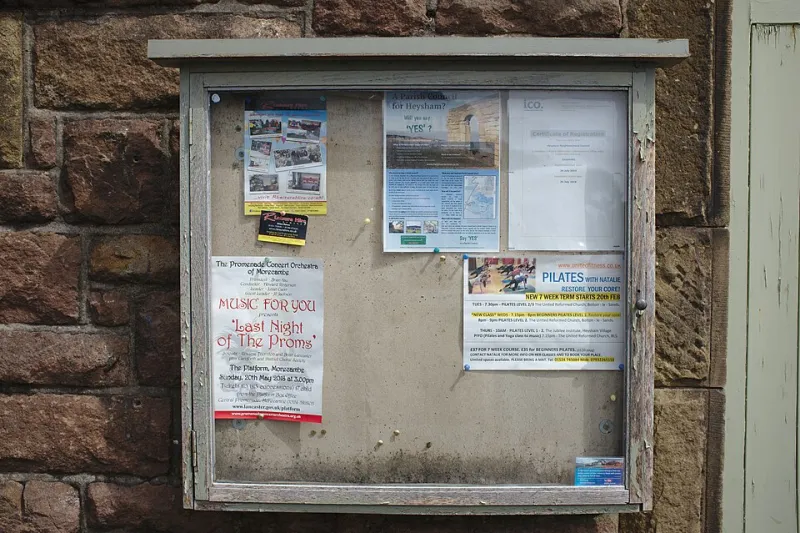
The box is also local news. 'Eggs off until the hens start laying again.' 'Back after half-term.' 'Honesty box, please be honest.' It is a noticeboard with produce. On a long drive, it is better than a service station: fresher, cheaper, stranger. But it is not a tourist attraction. It is someone's drive. Do not park across the gate. Do not photograph the house. Do not let your dog chase the chickens.
Being a good customer in 2026
Carry coins. Small denominations. Pay the asking price. Do not use the tin as a piggy bank. Close the lid. Leave the gate as you found it. If you love something, leave a note; the seller will find it when they next come out with a tray. If you see the person, say thank you. If the box is empty, do not loiter. If you have children, teach them that the coins in the tin are not a treasure hunt.
And if you are the sort of person who thinks honesty boxes are quaint, remember this: they are not a relic. They are a small, practical argument that most people are decent. They are also a test. The table is set. The tin is there. The sign says thank you. Put your money in.