The Street Watches Back: A Viewer's Guide to the Doorbell Camera Soap
There is a particular kind of entertainment available now on almost any residential street in Britain, and it is free, and it is on at all hours, and it stars your neighbours.
I speak, of course, of the doorbell camera. The little grey lozenge above the letterbox that has quietly converted the ordinary street from a place where things happen to a place where things are watched happening, reviewed, clipped, and forwarded to eleven people with a heading like “anyone know this man?”
We did not vote for this. And yet here we are, with a front row seat.
The new local theatre
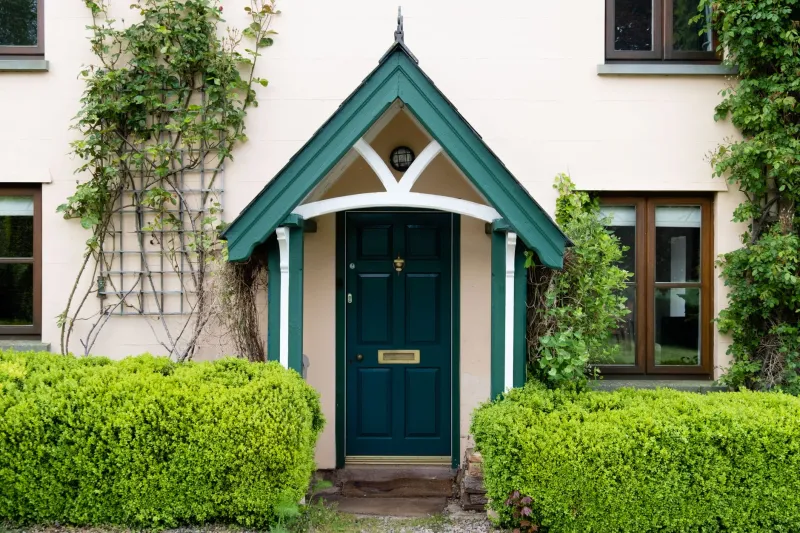
Consider what the doorbell camera actually is. It is not a security device, or not only one. It is a stage camera pointed at a stage nobody designed — the two square metres of path between the pavement and your front door — with a permanent audience of everyone on the group chat.
The results are remarkable. In the last year alone, my street has produced, entirely without planning permission: a three-week arc about a wheelie bin placed two feet too far left; a full-blown mystery about who was parking in the space outside number 14; a cameo from a delivery driver who rang the bell, waited four seconds, and left a note saying “no answer” while standing next to a window with a person clearly visible in it; and a genuinely moving subplot about a hedge.
This is continuing drama of the highest order. It is also, and this is worth saying plainly, quite a lot of surveillance.
A viewer's taxonomy
If you are going to watch the street feed — and you are, we all are — it helps to know the genres.
The Parcel Note. The foundational text. Somewhere between haiku and passive aggression. “Left in the porch” (there is no porch). “Left with neighbour” (there is no neighbour in). “Left in a safe place” (it is raining, it is not a safe place). The parcel note is the only literary form in Britain that reliably improves with a laugh emoji.
The Lost Cat. Usually not lost. Frequently under a car, or in a shed, or round the corner sitting in a patch of sun with the air of a small deity. The lost cat post is not really about the cat. It is a communal anxiety exercise, and it is oddly comforting.
The Short Clip. Forty seconds of footage, filmed at night, of a figure walking past a gate. Captioned “just so people are aware.” No crime. No context. A person, existing, having committed the offence of being on a public footpath after eight.
The Hedge Incident. Slowest-moving genre, highest emotional stakes. Runs for weeks. Generally resolves with nothing at all happening, which is somehow the worst possible outcome.
The Friendly One. Someone posts footage of a stranger helping an elderly neighbour with a bag, or returning a dropped glove, and the whole street falls a little bit in love. These do not get many views. They are, objectively, the best clips.
How to watch well
The temptation with any camera is to treat it as evidence. Resist that. Most of the time you are not gathering proof, you are just watching a stranger do something slightly odd at 4.50pm, and the correct response is mild amusement, not a police report.
A few recommendations from someone who has watched a fair amount of this:
- Wait before you post. Twenty-four hours is plenty. Most of the drama will resolve itself by then, and you will be spared the small internal cringe that arrives at 6am.
- Blur or crop where you can. If you would not put a photo of someone's face on the noticeboard by the shop, do not put their face on the app.
- Do not narrate. No “suspicious behaviour”, no “I'll say no more”. Just say what the camera shows and let people make their own minds up.
- Watch your own frame. Your camera probably also records your neighbour's gate, their visitors, and the fact that they had a takeaway at 11pm. Point it at your own door, and check the angle every few months. It drifts, apparently, like everything else.
- Remember the pavement is public. People walk past your house. That is not an event.
The ethics bit, briefly
Here is the uncomfortable truth about the always-on doorstep: it works best when it is boring. The camera is at its most defensible when it records nothing, and at its least defensible when a street starts using it to build a case about someone's parking, someone's dog, someone's noise.
A camera trained on the public footpath captures people who never agreed to be filmed — postmen, school kids, dog walkers, the man who collects the bins. Most of us would think twice about filming that on a phone. We seem to think less about it when the box is screwed to the wall and does it automatically.
That does not make it wrong. It does mean it deserves a bit of thought, occasionally, preferably while the kettle is on.
The doorstep is a stage
The strangest part of all this is how quickly the ordinary became watchable. Two decades ago, the idea of a neighbourhood where every front path is filmed by a small grey box and discussed on a phone app would have seemed like science fiction, and slightly sinister science fiction at that.
Now it is simply the street. And on a good night — a cat reunited, a parcel found, a hedge truce declared — it is the most neighbourly thing we have invented in years, and it happens without anyone having to knock on a door.
Worth watching. Worth watching kindly, too.