The Folding Table Accord: A Boot Sale Field Guide for 2026
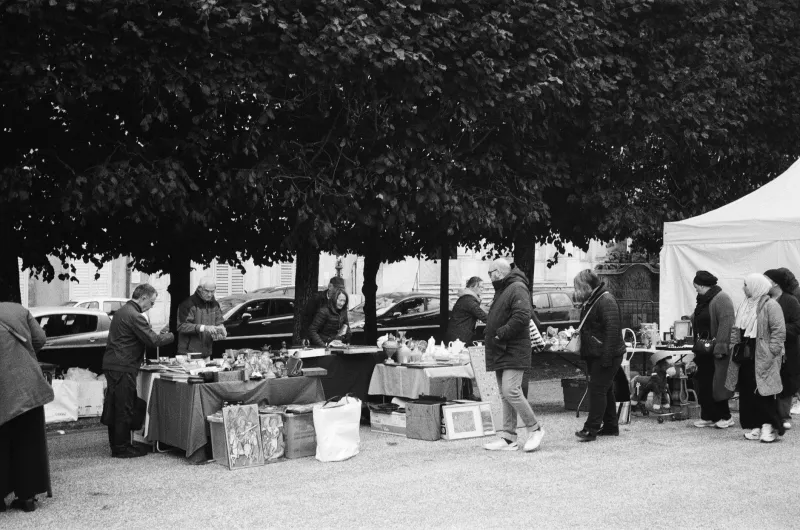
A car boot sale is a shop only in the loosest sense. Nobody behind the folding table has a returns policy. The floor plan is a field. The lighting is whatever the sky is doing. And the stock has usually been carried from a loft, a shed or the back of a garage in bin bags that smell faintly of old lawnmower. That is the appeal. You are not shopping so much as entering a temporary republic, one with its own etiquette, its own early-morning constitution and its own system of diplomatic immunity.
Sunday morning is when this republic convenes. By nine o’clock the serious business is already half done. By ten, the atmosphere shifts from hunt to stroll. By eleven, someone is selling a wooden stepladder and a box of mismatched cutlery as a single lot, and everyone is pretending not to notice the rain starting.
The early-bird peace treaty
The first rule of boot sale diplomacy is to understand the early-bird crowd. They arrive with torches in autumn, thermoses in all seasons and a stare that says they have seen things in the half-light. They are not rude, exactly. They are focused. Do not stand between an early bird and a box of brass door handles unless you are prepared to explain yourself.
If you are not one of them, do not pretend to be. There is no dignity in arriving at 6.40am, buying a chipped teapot out of panic and then spending the rest of the morning carrying it like a small, ceramic regret. Arrive when you arrive. The best tat is not always first. Sometimes it is third, after the early birds have taken the obvious things and left the odd things behind.
The art of the opening offer
Haggling at a boot sale is not an argument. It is a small piece of theatre with agreed limits. The seller knows the game. You know the game. The trick is to play it lightly.
Start by asking a question rather than making a declaration. “What would you take for the pair?” is softer than “I’ll give you two quid.” It gives the seller somewhere to go. If the answer is firm, accept it or walk away without drama. There is no need to explain that the item is scratched, incomplete or probably haunted. They know. They were there when it came out of the loft.
A useful rule: never haggle over something you do not actually want. It wastes everyone’s time and makes you the person who slows down the queue at a table selling second-hand spirit levels. If you want it, make an offer. If you do not, say “thanks anyway” and move on. That phrase is the oil in the machine.
Reading the table
A boot sale table tells you a lot about the seller. A tidy table with prices already written on masking tape is a table that expects order. A table with everything in one heap is a table that expects you to rummage. A table with a handwritten sign saying “ALL £1” is a table that has made peace with its past and wants to go home.
There is also the matter of the car. If the boot is still open and half full, the seller is still in the process of deciding what this morning is. If the boot is closed and they are sitting in a camping chair with a flask, the negotiation window is open but the energy is low. Adjust your approach accordingly.
What to look out for
Among the phone cases and incomplete jigsaws, there are genuine curiosities. Old Ordnance Survey maps are often cheap and quietly beautiful, especially the ones with handwritten route notes in the margins. Manual typewriters turn up more often than you would think, usually with a sticky key and a story attached. Pyrex in patterns your grandparents had is having a moment, though the moment has been going on long enough that it is now simply a fact of life.
I have a soft spot for old British Rail timetables and museum guidebooks from the 1970s and 1980s. They are cheap, they fit in a coat pocket and they contain a version of the country that is both gone and oddly familiar. A box of postcards is another good bet. You are not buying postcards. You are buying a small, accidental archive of other people’s holidays.
And then there is the mysterious category: the thing you cannot identify but cannot leave behind. A brass object with no obvious purpose. A wooden box with a sliding lid. A framed print of a bridge you have never crossed. Buy one of these per season, maximum. Otherwise you become the person whose spare room is a museum of unresolved decisions.
The weather clause
The British boot sale is a weather-dependent institution. A grey sky keeps the crowd thin and the prices reasonable. Sudden sunshine brings out the optimists and the ice cream van. Rain is the great leveller. It compresses the whole field into a few tarpaulins and makes every purchase feel like a rescue mission.
Take a coat. Take a bag for life. Take a five-pound note and a pocket of coins, because the card reader is a rumour at half the tables. And take the view that the morning is the point, not the haul. The best boot sale days are the ones where you come home with one strange little object and a story about the man who tried to sell you a set of golf clubs and a fondue set as a job lot.
That is the accord. You browse without urgency. You haggle without heat. You leave with something you did not know you wanted and a mild respect for the person who sold it to you. Sunday morning, done properly, is not a shopping trip. It is a small, outdoor lesson in getting along.