The Stapled Weather Report: A Field Guide to the Parish Magazine
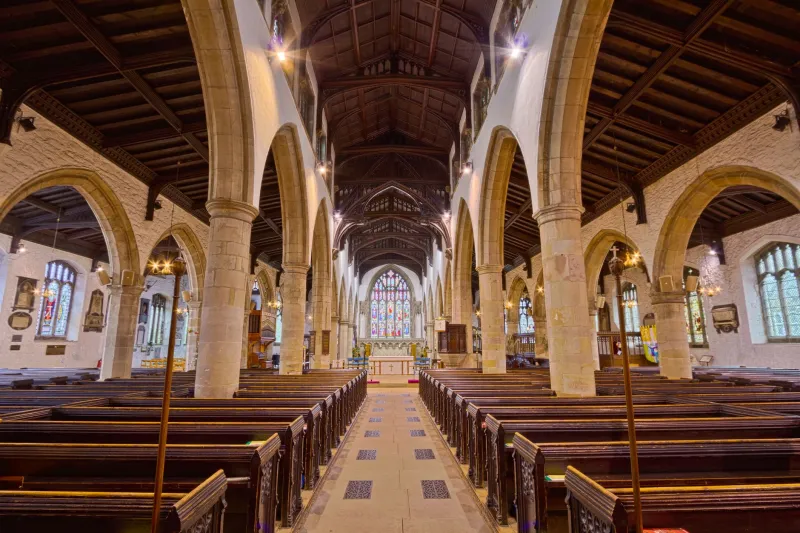
Thirty pence is a strange price for a town’s soul. Yet there it is, stapled and slightly damp at the corners, waiting in a wicker basket by the church door: the parish magazine. In 2026, when most local news arrives as a screenshot of a screenshot in a WhatsApp group, this humble artefact still does something no algorithm can quite manage. It tells you what is happening, who is cross with whom, and where you can buy a second-hand stairlift.
I am not being nostalgic for nostalgia’s sake. I am recommending a specific reading practice. The parish magazine is not a magazine in the commercial sense. It is a weather report, a noticeboard, a gossip column and a directory of mobile hairdressers, all folded into A5 and held together by two staples that have seen things. Read it properly and you can forecast the mood of a town for weeks.
Start at the back
Most people begin at the front, which is a mistake. The cover is usually a photograph of the church in snow, or a close-up of a flower with a Biblical caption, and it tells you almost nothing except that someone owns a decent camera and knows how to use the word ‘Eastertide’. The back pages are where the drama lives.
Look for the notices first. The jumble sale. The coffee morning. The quiz night in aid of the roof fund. The funeral tea, with its quiet parentheses: ‘family flowers only’ or ‘donations to the air ambulance’. These are not small things. They are the town’s emotional timetable. A parish magazine that lists three funerals and one jumble sale in the same month is not a cheerful read, but it is an honest one. A parish magazine that lists a beetle drive, a barn dance and a ‘men’s breakfast’ is telling you something else entirely: the social engine is running.
The vicar’s letter is a weather system
You can learn a great deal from how the vicar’s letter begins. If it opens with a reference to the weather, the vicar is tired. If it opens with a reference to the reading for the week, the vicar is organised. If it opens with a meandering anecdote about a broken kettle and the kindness of a neighbour, the vicar is gently processing something and expects you to come along for the walk.
These letters are not sermons. They are essays in disguise. They have beginnings, middles and ends, but the ends often arrive unexpectedly, like a bus you were not sure would come. The best ones contain a sentence that seems to be about a hedgerow but is actually about grief. The worst ones contain the phrase ‘as I write this’ three times. Both are worth reading, because both tell you what the person at the front of the church thinks the rest of us need to hear.
Small ads, large truths
The advertisements are the most underrated pages. A mobile hairdresser. A chiropodist who does home visits. A man called Keith who will sharpen your mower blades and ‘has a van’. A solicitor’s firm whose address is a market town and whose font is Times New Roman. These are not adverts. They are a map of local trust.
If the magazine has a full-page advert for a funeral director, the town is ageing. If it has a half-page advert for a children’s ballet class, the town has young families. If it has an advert for a ‘wellness coach’ next to an advert for ‘traditional upholstery’, you are looking at a place in transition. And if the same advert has been running since 2019 with the same phone number and the same slightly wonky logo, that is not laziness. That is a local institution.
The jumble sale as theatre
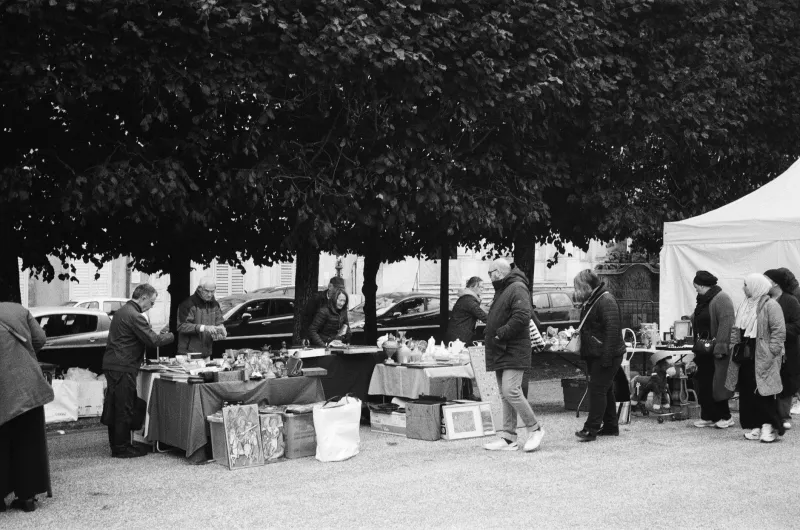
The jumble sale notice is a three-act play. Act one: the breathless call for donations, usually with a deadline. Act two: the promise of ‘bargains galore’ and ‘refreshments available’. Act three: the grateful thanks to everyone who helped, printed a month later, with a specific number of pounds raised and a vague reference to ‘the boiler’.
Read these notices in sequence and you can track the fortunes of a church hall. One year it is a new kitchen. The next it is a new roof. The next it is ‘urgent repairs to the north aisle’, which sounds like a euphemism for something much worse. The jumble sale is not really about jumble. It is about a community proving to itself that it can still organise a trestle table.
The small print is the plot
The small print is where the parish magazine gets quietly dramatic. ‘Items for the next issue must reach the editor by the 14th.’ ‘The deadline is strict.’ ‘Please note the change of venue.’ ‘Due to unforeseen circumstances, the December meeting has been cancelled.’ These sentences are the equivalent of a cliffhanger in a soap opera. You do not know what the unforeseen circumstances were, but you can guess, and guessing is half the pleasure.
Then there are the corrections. A wrong date. A wrong time. A wrong phone number. The correction is always printed with a slightly apologetic tone, as if the editor is holding up a hand and saying, ‘We are only human, and the photocopier is old.’ These are the moments that make the parish magazine feel less like a publication and more like a letter from a friend who has had a difficult week.
How to read one properly in 2026
First, buy one. Thirty pence, or whatever the cover price is now. Do not take a free one unless it is offered. There is a principle at stake.
Second, read it in one sitting, but not in order. Start at the back, then the adverts, then the vicar’s letter, then the calendar. Leave the cover for last. It will mean more once you know what the month has in store.
Third, look for the recurring characters. The editor who thanks everyone. The treasurer who thanks everyone twice. The anonymous donor who wishes to remain anonymous but is described in enough detail that everyone knows exactly who it is. These are not flaws. They are features.
Fourth, check the dates. In 2026, many parish magazines have a QR code or a Facebook page, and that is fine. But the printed date is still the anchor. If the magazine says the fete is on the 12th, it is on the 12th. The internet may disagree. The internet is wrong.
Why it still matters
The parish magazine is not a substitute for local journalism, and it is not trying to be. It is something odder and more useful: a record of the small decisions that make a place liveable. Who is opening the hall. Who is running the raffle. Who is making the tea. Who is willing to admit, in print, that the photocopier has jammed again.
In a year when so much of our local life has been flattened into notifications, the parish magazine remains stubbornly physical. It smells of ink and slightly of someone’s kitchen. It is delivered by hand, or bought from a basket, or pushed through a door by a neighbour who knows you are in. That is not a small thing. That is the whole point.
So next time you see one, do not walk past it. Thirty pence is cheap for a weather report. And this one comes with a jumble sale.