Drawer Nine, Brass Hinges: The Ironmonger as Town Historian
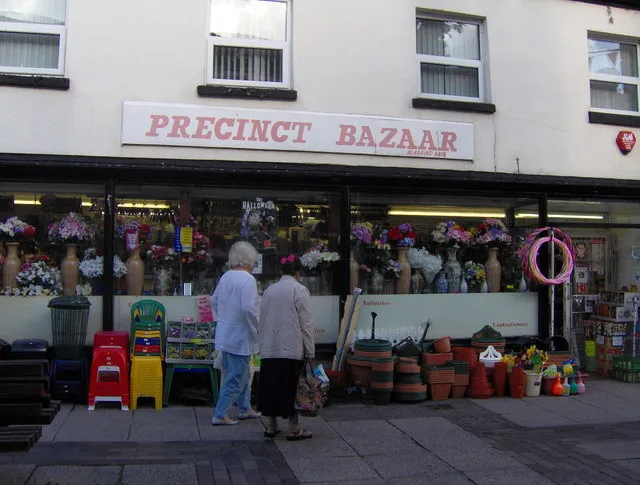
Photo: Joan Vaughan, CC BY-SA 2.0, via Wikimedia Commons
There is a particular smell to an old hardware shop. Dust, paraffin, cold metal, and something faintly oily that has settled into the wood over decades. You notice it before you notice the shelves. Then you notice the drawers: row after row of them, each one labelled in biro or Dymo tape or a faded copperplate hand. Brass hinges. 3/8 BSW. Odd washers. Do not mix.
These places are not museums, though they can look like them. They are working archives. A town’s hardware shop remembers what the town built, what it repaired, and what it quietly gave up on. You go in for a washer and come out with a short history of the neighbourhood.
The Drawer That Knows Too Much
Start with the drawers that nobody opens unless they have to. The ones with brass hinges, cupboard catches, or screws in sizes that no longer appear on the front of a packet. A drawer like that is a layer cake of local time. At the bottom, maybe, are fittings for Victorian sash windows. Above them, hinges for 1930s semis. Then the odd bit of 1970s DIY: brown plastic handles, brass-effect knobs, little packets of tacks with prices crossed out twice.
A handwritten tag can do more than a planning notice. 1/2 inch brass screw, 4p each tells you the shop once sold screws loose, by the handful, to people who knew exactly what they wanted. A drawer of mismatched hinges tells you local builders were once patching up rather than replacing. A shelf of obscure electrical fittings tells you the town has at least one stubborn person who refuses to rewire the hall light.
This is not nostalgia. It is evidence. The shop has been indexing the town’s repairs for longer than most of us have lived here.
Field Notes: What to Look For
The first thing to look for is not an object but a counter. If there is a person behind it who can glance at the thing in your hand and say, “You want a fibre washer, not rubber,” you are in the right place. That kind of expertise is not a performance. It is the accumulated memory of a thousand small failures.
Then look at the paint. Not the display of new tins, but the shelf of mismatched pots: custom mixes, testers, half-used tins with names like Damp Linen or Goose Wing. Each one is a small record of a local hallway, a front door, a kitchen that somebody tried to brighten in a weekend. The shopkeeper will often know which estate that colour came from. They will not always say.
Look at the loose screws. Not the racked packets, but the drawers of singles. Count the types of head. Notice whether there are more slotted or more Pozidriv. Notice whether the shop still sells those little brass cup hooks that everybody’s grandmother had in the airing cupboard. These are not just stock levels. They are clues about what local people are still fixing, and what they have stopped fixing.
And look at the key-cutting machine. It is usually near the door, humming or waiting. A hardware shop that cuts keys is a shop that expects people to stay. It is a small promise that the town still has locks worth changing.
The Washer Test
My favourite recommendation is simple: take a broken thing to an independent hardware shop and ask. Not a vague request. Not a photograph on a phone. The actual thing. A tap cartridge, a broken handle, a bracket with one hole snapped off. Put it on the counter and watch what happens.
The shopkeeper will not always have the part. That is not the point. The point is the diagnosis. They will turn it over, name it, tell you what it was probably off, and explain why the modern equivalent is either fine or useless. You will learn something about your own house. You will also learn something about the town: which plumbers still come in, which estates are having a spate of failed hinges, which old trade is still hanging on by a thread.
This is the oracle at work. It does not predict the future. It reads the present through a drawer of odd washers.
A Working Shop, Not a Shrine
There is a temptation to treat these places as quaint. That would be a mistake. They are businesses, often thin on the ground, and they survive because they are useful. The romance is real, but it is a by-product. The main event is the quiet exchange of knowledge: you bring the problem, they bring the index.
So go in on a weekday morning, if you can. Buy one brass screw even if you only came for a look. Ask about the drawer with the handwritten labels. Listen to the answer. The town is in there, filed by size and thread, waiting to be read.