The Clerk Will Circulate: A Viewer’s Guide to the Parish Council Box Set
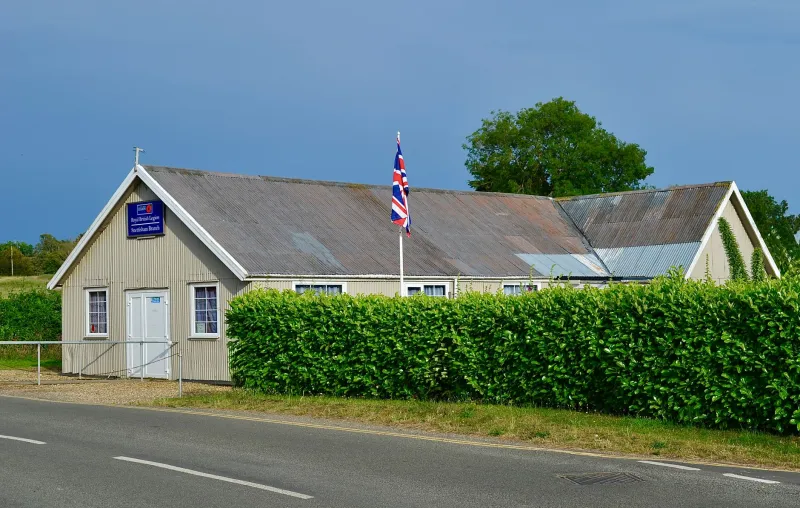
Every few weeks, usually on a wet Tuesday, I do something that would baffle most of my streaming subscriptions: I open the parish council website and download the latest minutes. Not the agenda. The minutes. The PDF with the slightly wonky crest at the top and the clerk’s name in the footer. In 2026, when everything is a content strategy, this is the most underrated box set in Britain.
It has everything: recurring characters, unresolved storylines, a strict format, and a satisfying sense of consequence. Nobody is trying to go viral. Nobody has a personal brand. The stakes are small but real, which is exactly what makes it gripping. A pothole is not a metaphor. It is a pothole. And yet, episode after episode, it becomes something more.
Opening Credits: Apologies, Declarations, and the Agenda
Start with the structure. Parish council minutes are wonderfully formulaic. Apologies for absence. Declarations of interest. Minutes of the previous meeting. Matters arising. Planning. Finance. Correspondence. Any other business. It is a liturgy, and like all liturgies it rewards attention to the small variations.
Who is absent? Who sends apologies? Who sends apologies but then turns up anyway, slightly late, with a folder? The declarations of interest are where the quiet character work happens. A councillor who owns land near the proposed verge improvement will declare an interest and then say very little for the rest of the evening. You can feel the restraint through the page.
The chair runs the meeting. The clerk runs the document. Never confuse the two. The chair has the gavel, or the firm suggestion of one. The clerk has the semicolons. More on those later.
The Pothole Saga: A Long-Running Plotline
Every parish has one. Sometimes two. A pothole that has been reported, logged, escalated, photographed, re-reported and discussed at three consecutive meetings. In the minutes it becomes a serialised narrative. First: ‘Cllr Price reported a pothole on the lane near the bridge.’ Then: ‘The clerk had reported the matter to the highways authority.’ Then: ‘A response was awaited.’ Then, a few episodes later: ‘A response had been received; the matter would be reviewed in the next financial year.’
This is not bureaucracy. This is pacing. The pothole is the villain that will not be defeated. It has motives. It has a lair. It returns.
If you want to follow a storyline properly, read ‘Matters Arising’ first. It is the recap segment. It tells you what the last episode promised and what this episode has failed to deliver. The best parish council minutes are not the ones where everything is resolved. They are the ones where a small item keeps coming back, like a character who was supposed to leave in series two but proved too popular.
Allotment Boundaries and Other Territorial Disputes
Then there is the land. Allotment boundaries are the prestige drama of the parish council minutes. A hedge is not just a hedge. It is a boundary, a history, and possibly a breach of the tenancy agreement. A gate that opens the wrong way can generate more correspondence than a by-election.
The language is beautiful in its precision. ‘It was agreed that the clerk would write to the allotment association regarding the maintenance of the boundary hedge.’ That single sentence contains a whole episode: the complaint, the site visit, the phone call, the draft letter, the reply, the feeling that this will all happen again in spring. You do not need a cliffhanger. You have a hedge.
And because these are minutes, not a novel, the best bits are often in the passive voice. Things ‘were noted’. Concerns ‘were raised’. A decision ‘was deferred’. Deferral is the parish council equivalent of a season finale. It means everyone will be back.
Planning Objections: The Quiet Thriller
Planning is where the minutes become a thriller, albeit a thriller set in a village hall with a squeaky chair. An application for a rear extension. A replacement window. A change of use for a shed that may or may not be a workshop. The council discusses, and then the clerk writes the objection.
This is where the semicolons earn their keep. A good clerk can object to something in a way that is both devastating and polite; the punctuation does the heavy lifting. ‘The council objects to the proposed development on the grounds that it would be out of keeping with the surrounding area; would result in the loss of a mature tree; and would exacerbate existing parking difficulties on a narrow lane.’ Three clauses, one breath, no room for argument. It is the prose equivalent of a firm hand on the shoulder.
Read enough of these and you start to see the town differently. The new porch on the corner. The fence that appeared without warning. The extension that somehow got through. The minutes are the paper trail, and the paper trail is the story.
The Supporting Cast: Public Participation and the Dog Bin
Public participation is the open-mic night. Usually three minutes per resident. Sometimes one resident uses all three minutes to discuss a dog waste bin. Sometimes two residents disagree about the same dog waste bin. This is not trivial. This is local democracy in its purest form: a person standing up in a cold hall to say that the bin on the corner has not been emptied since the clocks changed.
The minutes will record it with the same seriousness as a housing development. ‘A resident raised concerns regarding the dog waste bin on School Lane. The clerk agreed to contact the district council.’ That is the whole scene. It is enough.
How to Watch: A Viewer’s Guide
Start with the agenda, then read the minutes. The agenda tells you what is coming. The minutes tell you what actually happened. Compare the two and you can see the gap between intention and reality, which is where all the best drama lives.
Follow the ‘Action’ column if there is one. Who is supposed to do what? Did they? If not, why not? This is the long game. It is also how you learn that the clerk is the only person keeping the whole production running.
Do not heckle the clerk. Do not forward the PDF to the local Facebook group with a snarky caption. Do not treat the minutes as gossip. Treat them as what they are: a record of small decisions made by people who volunteered for a job that mostly involves reading emails about hedges. In 2026, that is a kind of public service we should probably admire more than we do.
Why It Matters
The parish council minutes are not glamorous. They are not designed to be enjoyed. But they are one of the most revealing local documents we have. They show you how a place works, who speaks, who listens, who defers, and who keeps coming back to the same pothole. They are the box set nobody recommends and everybody should try. Start with one meeting. Give it three episodes. By the time you reach ‘Matters Arising’, you will be hooked.